Difference between revisions of "Template:Occult.live:Today's featured article"
Jump to navigation
Jump to search
Occultwiki (talk | contribs) |
Occultwiki (talk | contribs) |
||
| (132 intermediate revisions by the same user not shown) | |||
| Line 1: | Line 1: | ||
[[File: | [[File:Oxira 1.jpg|200px|left]] | ||
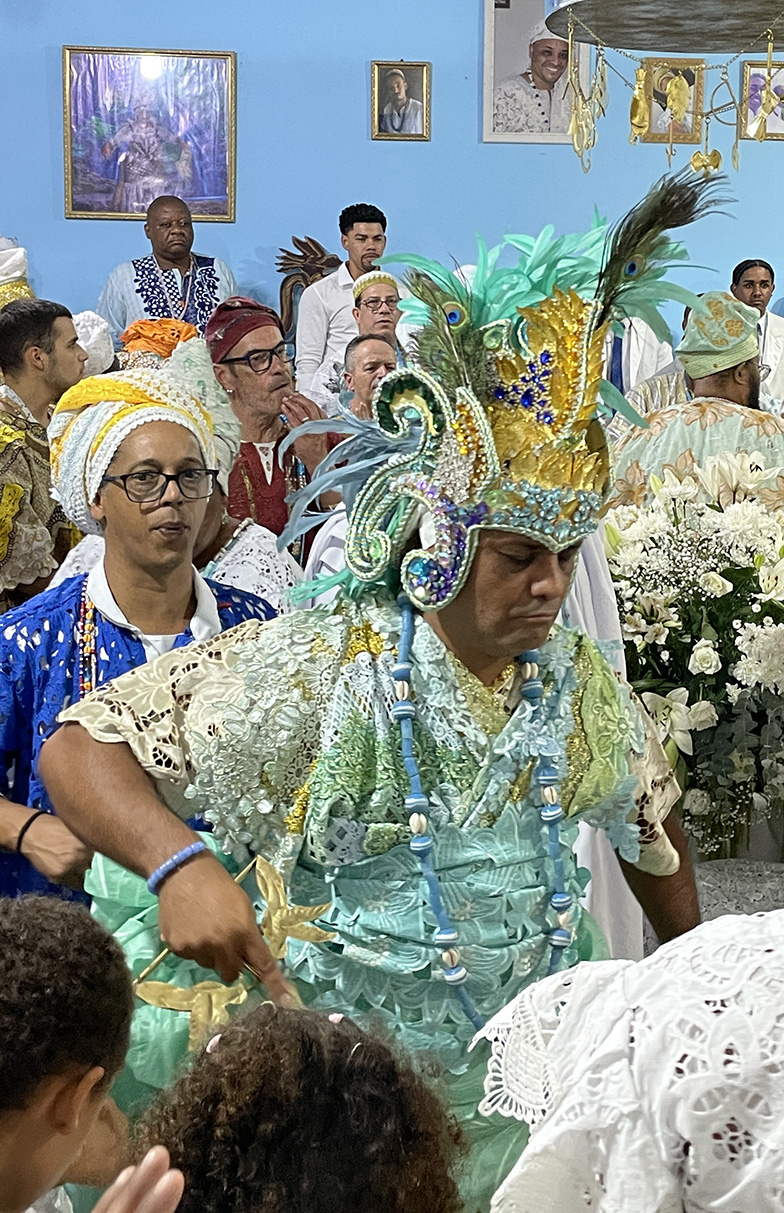
'''[[ | '''[[Candomblé]]''' is an [[African diaspora religion]] that developed in Brazil during the 19th century. It arose through a process of syncretism between several of the traditional religions of West and Central Africa, especially those of the Yoruba, Bantu, and Gbe, coupled with influences from [[Christianity|Roman Catholicism]]. | ||
Candomblé arose in 19th-century Brazil, where the imported traditional African religions of enslaved West Africans had to adapt to a slave colony in which [[Christianity|Roman Catholicism]] was the official religion. It is thus one of several religions that emerged in the Americas through the interaction of West African and Roman Catholic traditions, and for this reason is considered a "sister religion" of Cuban [[Santería]] and [[voodoo|Haitian Vodou]]. | |||
'''([[Candomblé|Full Article...]])''' | |||
'''([[ | |||
Latest revision as of 22:47, 12 February 2026

Candomblé is an African diaspora religion that developed in Brazil during the 19th century. It arose through a process of syncretism between several of the traditional religions of West and Central Africa, especially those of the Yoruba, Bantu, and Gbe, coupled with influences from Roman Catholicism.
Candomblé arose in 19th-century Brazil, where the imported traditional African religions of enslaved West Africans had to adapt to a slave colony in which Roman Catholicism was the official religion. It is thus one of several religions that emerged in the Americas through the interaction of West African and Roman Catholic traditions, and for this reason is considered a "sister religion" of Cuban Santería and Haitian Vodou.