Difference between revisions of "Template:Occult.live:Today's featured article"
Jump to navigation
Jump to search
Occultwiki (talk | contribs) |
Occultwiki (talk | contribs) |
||
| (29 intermediate revisions by the same user not shown) | |||
| Line 1: | Line 1: | ||
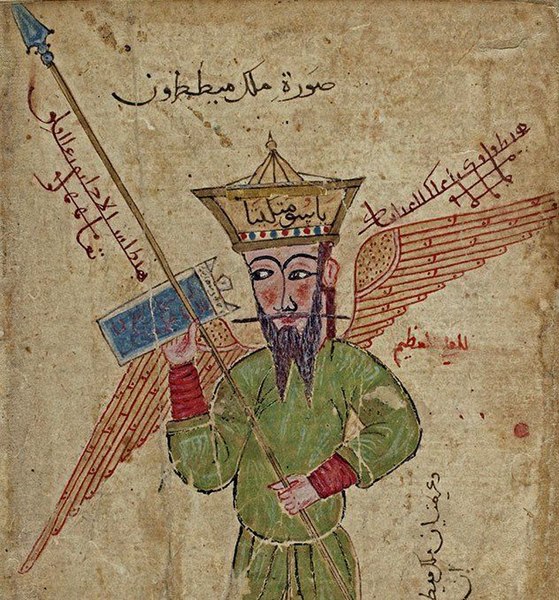
[[File: | [[File:Metatron Islamic Angel.jpg|200px|left]] | ||
'''[[ | '''[[Metatron]]''' is an [[angel]] in [[Judaism]], [[Christianity]], and [[Islam]] mentioned three times in the Talmud, in a few brief passages in the Aggadah, and in mystical [[Kabbalah|Kabbalistic]] texts within Rabbinic literature. | ||
The figure forms one of the traces for the presence of dualist proclivities in the otherwise monotheistic visions of both the Tanakh and later Christian doctrine. In the Jewish kabbalistic tradition, he is sometimes portrayed as serving as the celestial scribe. The name Metatron is not mentioned in the Torah or the [[Bible]] and how the name originated is a matter of debate. In Jewish apocrypha and early Kabbalah, 'Metatron' is the name that Enoch received after his transformation into an angel. | |||
'''([[ | '''([[Metatron|Full Article...]])''' | ||
Latest revision as of 08:06, 24 June 2026

Metatron is an angel in Judaism, Christianity, and Islam mentioned three times in the Talmud, in a few brief passages in the Aggadah, and in mystical Kabbalistic texts within Rabbinic literature.
The figure forms one of the traces for the presence of dualist proclivities in the otherwise monotheistic visions of both the Tanakh and later Christian doctrine. In the Jewish kabbalistic tradition, he is sometimes portrayed as serving as the celestial scribe. The name Metatron is not mentioned in the Torah or the Bible and how the name originated is a matter of debate. In Jewish apocrypha and early Kabbalah, 'Metatron' is the name that Enoch received after his transformation into an angel.